
.avif)
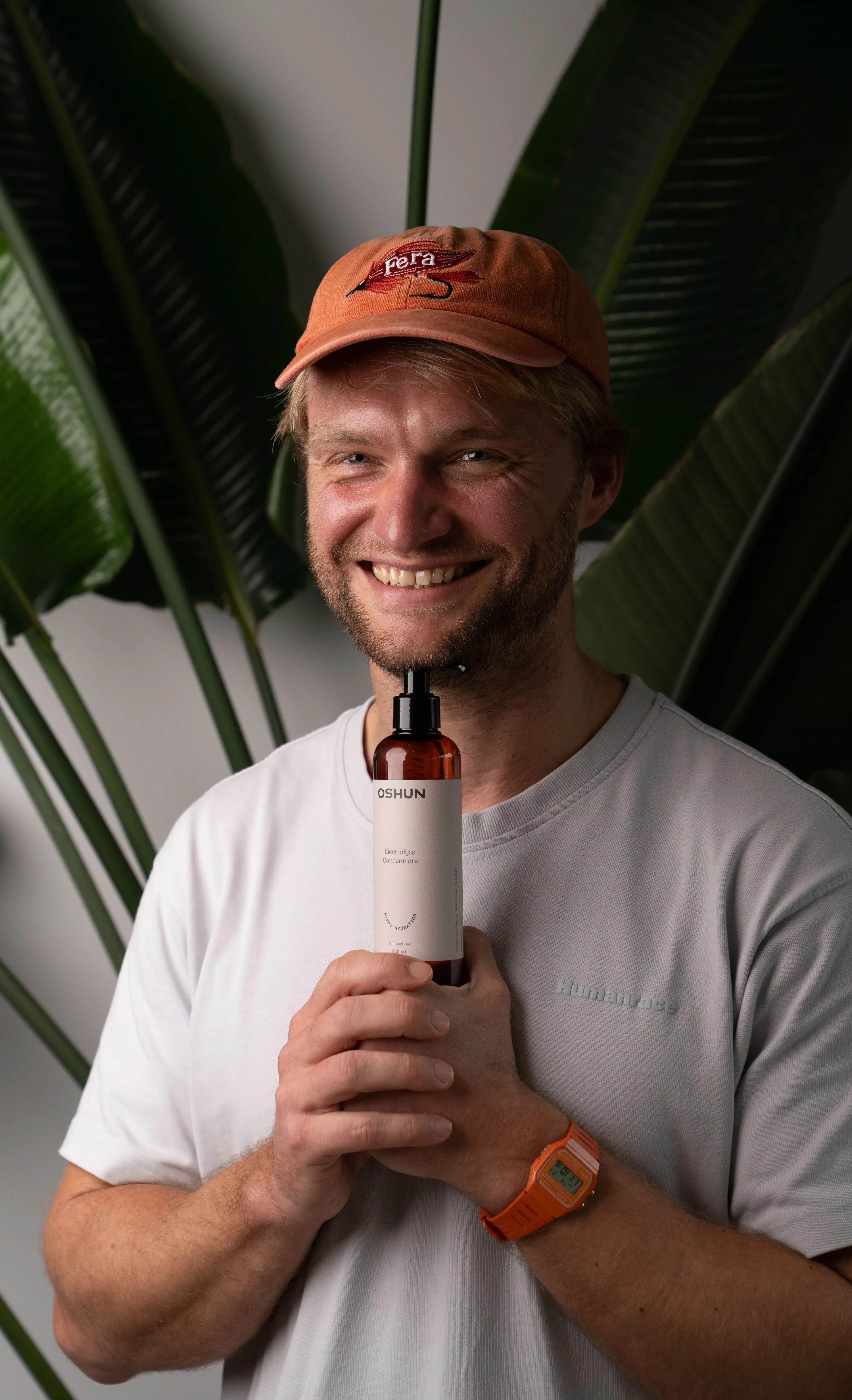


High Stakes Growth® is a podcast hosted by Forest Bronzan and Leah Lloyd of Jetset that takes listeners inside the bold decisions behind today’s most exciting brands. The show brings candid conversations with the leaders who built them - unpacking the high-stakes moments, tough calls, and critical strategies that made these brands what they are today. Explore the show.
Matt notes that this is Dave Chapelle’s advice to aspiring comedians when they ask Dave for advice. He believes it works for founders too because we all have ideas for products, services, companies, etc., but they all mean nothing if you don’t start. We can sit around and think about if your ideas will work, but the only true way to know is to test them out in the market. It can be scary, but you have to get on stage.
Matt is a long-time entrepreneur. One of his first ventures was Meetup.com, a social platform for organizing in-person gatherings that took off when U.S. Presidential candidates started using it in 2004.
But Matt is best known today as the Co-founder, Executive Chairman, and CEO of BARK, which provides toys, treats, food, dental care, and now even air travel, for dogs. He grew the company as CEO for almost a decade, took them public, left the CEO position, then returned as CEO. Matt’s Great Dane named Hugo inspired him to start BarkBox in 2012, which then later became BARK.
In our conversation, Chase talked openly about evolving from a scrappy, early-stage founder into being the CEO of a large team. He said that he’s always been stronger with the creative, storytelling side that defines an early-stage founder than with the numbers-and-spreadsheets side that comes with being a CEO, which is why he brought in new leadership for Blenders’ next phase of growth. Now, as he works with the new CEO to push the company toward a nine-figure run rate, his advice to other founders at this stage is to set a vision so ambitious that it attracts the kind of top-tier talent capable of bringing it to life.
Chase is the founder of Blenders Eyewear, a San Diego–born sunglasses brand he launched in 2012 with a bold, beachy vibe. Over the next decade, he turned Blenders into a global brand, most notably through their partnership with Deion “Coach Prime” Sanders. In 2019, Chase sold a majority stake to PE in a deal valued around $90M. And In 2024, Chase hired a new CEO and moved into the role of Brand Evangelist, where he now focuses on storytelling, collaborations, and keeping the brand’s original energy alive.
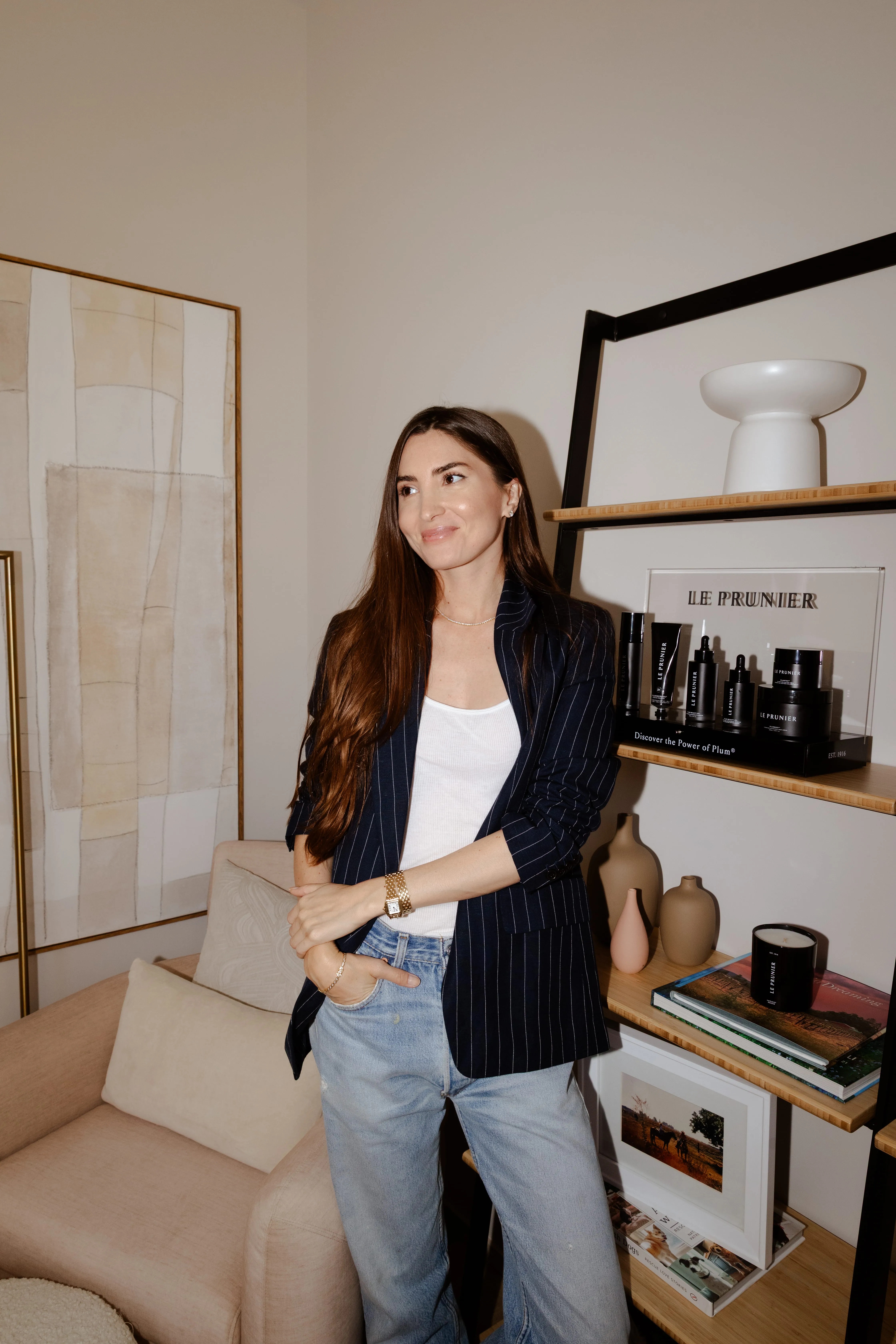
Every business faces steep challenges, and Le Prunier has been no different. Allison and her sisters have had to enter the beauty world as outsiders, persuade labs and retailers to take a chance on their unconventional product, and rapidly scale operations after a Chrissy Teigen shoutout produced 30,000 unexpected orders overnight. But on the other side of these challenges was always another level of growth for the business. So, Allison’s message to founders is: don’t give up.
Le Prunier is an award-winning skincare brand that harnesses antioxidant-rich plums to create innovative, clean-beauty products. It’s a family business—co-founded in 2016 by sisters Allison, Jacqueline, and Elaine Taylor—who source their plums from their family’s fourth-generation organic farm in California, established in 1916. Bootstrapped from day one, the brand now thrives across DTC, Amazon, and 400+ retail doors in the U.S., with a growing presence in Europe. In 2026, they’re excited to launch three new products and further expand their wholesale partnerships.
Ryan’s advice comes from living many lives in his professional career. He began in finance, shifted into being a founder and “marketing guy” at a startup brand, and eventually found his happy place as an operator leading scale-up brands in the $40M–$200M phase. He loves “optimizing a business where there’s water already flowing through the pipes,” and knows that’s where he’s strongest. But getting to this clarity required lots of self-honesty and a willingness to shed earlier identities, and he invites other founders to do the same introspective work.
Ryan began his career in finance at Merrill Lynch before launching a career in CPG. He co-founded Factor, a ready-to-eat meal delivery brand, in 2012, and helped scale that business as both COO and CMO.
After leaving in 2017, Ryan continued to work with high-growth CPG brands. He led growth at Serenity Kids, then moved to HighKey, first as CMO and later as CEO, steering the company to an acquisition in 2024. Today, Ryan serves as President at MALK, a plant-based milk brand leading the dairy-alternative space. Since joining in June 2024, he’s helped them scale from $42M to $100M in annual revenue.
Steven’s answer comes from a career of constant experimentation – testing new products, ad creative, agency partners, and more. Because you can’t predict which of these “tests” will work ahead of time, the only thing you can control is how much of your resources you risk on each test. So, Steven’s advice to founders is: risk the minimum amount of time and capital necessary to validate your tests. This is part of his larger view that luck drives most of the upside in business. Managing risk well means designing your tests so that when luck doesn’t show up, the losses are survivable and you stay in the game.
Steven is a masters All-American sprinter. He started Xero Shoes in 2009 with his wife Lena after barefoot-style footwear helped him overcome chronic running injuries. This early experience helped inspire the brand’s core thesis: modern shoes actually cause pain and injury, and the future lies in the natural comfort, performance and health that comes from footwear that mimics a barefoot experience.
Today, the company does approximately $70M a year in revenue, has one of the highest repeat purchase rates in the shoe category, and has players on NBA and WNBA teams using its shoes. Looking to the future, Steven sees a clear path to building Xero Shoes into a billion-dollar brand.
Rob says that in business, “Advice is cheap. I don't think I could tell anyone how to do it. All I could say is that I believe most people can figure it out.” He notes that he didn’t have a business education or entrepreneurial background when he started, and simply learned by doing, step by step. Successful entrepreneurs are just normal people who figured it out. The important thing for founders, Rob says, is to try hard things, fail, learn, improve, and keep going.
Rob Fraser competed as a professional cyclist and five-time Canadian National Team member before transitioning to entrepreneurship. In 2016, he founded Outway, which has grown into one of the world's leading performance sock brands. He later launched Custom Lab, the premier custom sock manufacturer for global brands including Red Bull, Disney, and Uber. Today, he runs both companies, invests in early-stage startups, and maintains his competitive edge as an athlete.
Ryan explains that this advice is about taking chances. He puts much of his own success down to taking smart risks: launching Original Grain on Kickstarter, reaching out to huge brands and doing license deals, trying out new watch styles, etc. It’s advice that he believes serves both first-time founders starting their first venture and experienced ones trying something new. The core is: You’ll never know which ideas will work if they stay in the idea box, so the only move is to take a chance and start today.
Original Grain is a unique watch brand that uses reclaimed materials like wood from whiskey barrels, old guitars, and famous stadium seats to create watches with an authentic and historic feel. Ryan co-founded the brand in 2013 with his brother Andrew, raising $870k over two Kickstarter campaigns to launch operations. Today, they’ve collaborated with partners like the Yankees, Chicago Cubs, and Jack Daniel’s to create their watches and have surpassed $100M in lifetime revenue.
Joe mentioned that he’s seen other E-comm founders complain about how difficult it is to achieve profitability, “but meanwhile, they've got five agencies doing all these different things for them. And I have no issue with paying an agency, but I think that especially in the early stages, you really have to work really hard to make the economics of it work.” The message here is that bringing on specialists is a great idea, but only after you’ve done the work to reach a scale where their cost is easily outweighed by the extra revenue they create.
Joe is a former pro swimmer who represented Scotland at the 2014 Commonwealth Games. After retiring from sport, he used his familiarity with performance-based supplements to start his first company, Motion Nutrition, in 2015, which he later sold in 2022.
Soon after, he joined production company Knowjack Media, sharpening his storytelling and brand-building chops, and then co-founded Oshun in May 2024. Oshun offers electrolyte and magnesium supplements in a pump dispenser bottle that makes it easy to add minerals to any drink. From day one, Oshun has been profitable, allowing Joe and his team to grow on solid financial footing while creating new products and investing in future growth.
Myriam gives this advice to founders for two big reasons. First, working for someone else lets you experience what a good (or bad) culture is like, so you have a benchmark when you go to build your own culture. Second, it shows you what it truly means to have a boss. Myriam sees many founders start businesses because they want to “be their own boss,” but says you actually gain more bosses as a founder: employees, suppliers, and others who depend on you. In her view, you ultimately work for them, which is why time spent with a real boss can be good prep for what it feels like to have many “bosses” when you build your own company.
Myriam started Maguire Shoes with her sister, Romy, in 2016 to create a shoe brand that provides high-end footwear for women at an affordable price point. She designs the collections herself, drawing on her global experience designing shoes in cities like Paris, Milan, and more. The brand is unique in that on their website, they share the production cost of each pair of shoes so customers see what they’re paying for and feel confident in the value they’re getting. In 2026, Myriam is focused on expanding Maguire Shoe’s retail presence in Europe and building the foundation to hit their next major milestone: $20M in annual revenue.
Jacob explains his answer, saying, “The biggest lesson I've learned is that subconscious programming and the patterns that exist in our brain truly affect the outcomes in our life – affect the outcomes in our startups, in our companies, in our relationships, everything.” What we believe deeply affects what we do. So, his message here is that the deepest point of leverage you have as a founder to improve your life and business is to become aware of (and, if necessary, change) your core beliefs about yourself and the world.
Jacob is a serial founder. He previously started Commsor and Launch House, and is now co-founder of Superpower, which is a health “super app” that can detect the early signs of over 1,000 conditions by tracking over 100 different biomarkers.
Superpower publicly launched in 2024, and aims to shift the healthcare paradigm in the U.S. from reactive to proactive care. Jacob’s own focus on leading this shift is personal, shaped by seeing health struggles in his family and dealing with his own personal health crisis in 2021. In 2025, Superpower raised a $30M Series A.
Charles used to believe that the business idea and the people you built with were equally important to the business’s success, but 15 years into growing IZIPIZI with his two co-founders, he’s changed his mind: the partners are the most important. At IZIPIZI, their ideas have evolved many times over the years, but the company has continued to thrive, and Charles credits that success to the strength and trust of their founding trio. He says you should take the decision of who to partner with almost as seriously as who you marry – you might be together for decades, so it’s critical to get that choice right.
In 2010, Charles founded IZIPIZI with two high school friends to create modern, stylish eyewear for the whole family at an affordable price, while staying committed to the planet as a B-Corp certified brand. Based in Paris, the brand has since grown into a global business with a sizable retail, DTC, and wholesale footprint, and is now sold in 80 countries at over 8,000 doors, and 25 boutiques in Europe. Already popular across Europe, Charles and his team have recently turned their focus to the U.S., where, starting in 2025, they’ve been investing heavily with the ambition of making it IZIPIZI’s largest market.
Adam says that, “You can listen to a lot of other people talk about how they build businesses, but I think there has to be an aspect at least of it that's intuitive to you, in order for it to work.” He has followed that principle himself, starting Parable because he had strong intuitions about operational inefficiencies and how to solve them. The message to founders is: building a company is hard, but you have a better chance of success if you build around your natural intuitions and strengths.
Adam Schwartz previously co-founded TeePublic, an e-commerce marketplace for independent graphic artists that he scaled to become a 9-figure business and sold to Redbubble in 2018. Afterwards, he served as a board member to multiple public companies, and got a front-row view into the operational complexity and inefficiency that often plague enterprise organizations.
This inspired him to start Parable in 2024. They help companies who have 700 to 50,000+ employees drive measurable AI Transformation by uncovering operational inefficiencies through an AI-powered analysis of where people spend their time, highlighting how that time spend can be improved with AI and then measuring the impact of every AI investment across the company.
Founders often start businesses with certain personal financial goals in mind. And Ian’s advice here is to pick the right business for the financial outcome you want, because some businesses are simply harder to pull off than others. He compares SaaS, where he started his career, with E-comm, where he is now. He prefers his laundry detergent DTC business because it is high-margin, subscription-based, and has a broad market, while SaaS was much harder to scale in his experience. So, his advice to founders is: choose your business wisely.
Ian first co-founded and scaled BuildFire, a no-code mobile app builder, before exiting the company and shifting his focus to e-commerce. While still running BuildFire, Ian started Laundry Sauce, a laundry detergent brand with premium branding that has elevated the idea of what a detergent brand can be. He spent 18 months in R&D to develop a high-performance formula and signature scents, and today has scaled past eight figures in annual revenue.
Elaborating on this answer, Lily says, “If you believe in what you're doing and if you feel like you're on the right track, the right doors will open. And if the wrong ones don't open, that's because they were the wrong ones.” This is part of her larger message that founders need a healthy dose of “delusional conviction” to succeed. If, for example, a VC tells you “No,” it’s not a final verdict on your company, it’s just one outside voice who doesn’t see your vision. As a founder, you know your business best and care about it the most, so your own confidence in the vision is the most important thing.
Lily is a two-time founder who launched her first company, SPOTS NYC, (a custom treats company) in 2014 and later sold it to 1-800-Flowers in 2023. Becoming a mom opened the next chapter of her career and inspired her to build Auggie, a community-driven commerce platform where parents can swap advice and shop products and services providers that other parents recommend. Backed by nearly $4M in venture funding, Auggie has see consistent growth.
Garret’s advice is to not forget your “why” as you build your business. In his case, he started Kindred Bravely to become financially independent and spend more time with his family. But while he was in the middle building Kindred Bravely, he sometimes had to remind himself of his original “why,” since it was easy to get lost in the work. So, his advice for founders is to not let the work of building your business crowd out your “why” for building it in the first place.
Before Kindred Bravely, Garret built his career on the agency side, honing his skills in digital marketing and growth. After his wife Deanne struggled to find comfortable and functional maternity wear, they together co-founded Kindred Bravely in 2016 as a maternity and breastfeeding brand focused on solving real needs for new moms. They scaled the company into a leading DTC brand and ultimately exited via a majority sale to private equity in 2021. Today, Garret works with the brand part-time and devotes the rest of his time to mentoring founders and leading a local Vistage CEO peer group in San Diego.
Wylie’s answer traces back to Rumpl’s origin story. He and a friend were once stranded for several hours in a frozen van in northern California, and wrapped up in their sleeping bags to stay warm. That experience sparked the idea for a blanket made from sleeping-bag materials, and instead of overanalyzing it, they brought the concept home, built simple prototypes, and validated demand through a Kickstarter. For Wylie, this 0→1 stage is defined by simplicity and passion, and his advice to founders is to not overcomplicate brand building at the start.
Wylie is the founder, former CEO, and Chairman of Rumpl, a brand that creates performance blankets and sleeping bags for the outdoors. Rumpl launched on Kickstarter in 2014, which generated them $250K in 30 days. Since then, Wylie took Rumpl to Shark Tank, scaled to eight figures in annual revenue, and grew their retail presence to 1,300+ doors. In 2024, Wylie hired a seasoned GM and transitioned into the Chairman role, freeing him to focus on his strengths in product and creative while helping guide Rumpl into its next phase of growth.
Brad believes that hard work is “by far the greatest competitive advantage you can have,” and that your persistence is how you prove to customers, retailers, and partners that you truly care. He sees this commitment to showing up and doing the work as the opposite of a zero-sum mindset, where founders focus too much on competitors instead of their own execution. In his view, there’s plenty of room for everyone, and your energy is far better spent working hard and building the strongest brand you possibly can.
Brad started a snacks brand, No Sugar Company, in 2018 and a beverage brand, Joyburst, in 2022. They are the two latest brands in Brad’s long history in CPG, which began with Wellnx Life Sciences in 2000. Wellnx Life Sciences and No Sugar Company both hit $100M per year in annual sales at one point, and Joyburst reached that figure in 2025. Joyburst’s breakout has been fueled by bold marketing moves: a Super Bowl commercial, a “Joyburst” music video with Vanilla Ice, and a partnership with Disney that made them the official beverage partner for Inside Out 2 and Lilo & Stitch.
When MP says “Be persistent,” he’s drawing from his own experiences. While building his companies, he told us that he went seven years without a single day off, spent stretches on food stamps, and endured countless investor rejections. It was difficult, but he achieved his goals in the end. This made MP deeply aware that your ability to persist is one of the only true things in your control, and is his best advice for other founders.
Michael (or “MP” as most folks call him) is the creator of Maple, an app he started in 2020 that helps parents co-manage the invisible load of running a home through a shared calendar, to-dos, shopping lists, meal planning, and email inbox. With Maple, MP aims to move the needle on parenting culture in America by making it normal for moms and dads to share an equal portion of the work at home.
Before Maple, MP founded three companies: Live for Fame, GVNG, and Kit. Kit was a virtual marketing assistant that helped Shopify store owners run their marketing through text message conversations, which he sold to Shopify in 2016.
Little Trouble has grown rapidly to eight-figure annual revenue, and each time the business hit a new growth plateau, Dinah changed strategies or tactics to break through. This has meant: hiring a 3PL firm, shifting ad spend from TikTok to Meta, building new SKUs based on customer feedback, tapping into baby registries and mom communities, launching a rewards program, etc. The point is, if you want to keep scaling, you can’t rely on the same playbook forever. You have to keep updating your approach, even if it means letting go of what once worked.
Dinah founded Little Trouble as a kids’ clothing brand with a fun, punk-inspired aesthetic. After a decade in digital marketing, she started the brand on maternity leave in May 2022 when she couldn’t find fun boys’ clothes she actually wanted her sons to wear. Dinah built Little Trouble alongside her full-time corporate job for two and a half years before going full-time in 2024. Today, it’s grown into a $10M brand and she travels the world with her husband and two sons, spending time in places like New Zealand, Bali, and Japan.
Taylor told us he experienced extreme burnout while building his first company, Feat Clothing. After taking time off, the lesson he learned was that there’s so much more to life than business. Founders often get into tunnel vision and grind away at building their business, but Taylor cautions that we have to be aware of when this behavior serves us vs. when it radically drains our energy. His advice is to: relax, breathe, and remind yourself that whatever you believe is terribly important in the business probably doesn’t matter in the grand scheme of things.
Taylor founded an athleisure brand, Feat Clothing, in 2014. He grew the brand to over $50M in lifetime sales before selling a majority stake to PE in 2024. In 2025, he got back into the game by founding Atrios, a startup backed by a16z that’s rewarding tastemakers for the value they create. Taylor has been a “tastemaker” his whole career, introducing people to each other in his network. Atrios rewards tastemakers thousands of dollars a month for introducing products they love to people they know.
Henrik explains that the emotional ups and downs are “part of the journey. And I would say the tougher the difficulties or hurdles you are getting into, the closer you are to a larger breakthrough or a success.” For him, having days where you “believe you’re a king” and days where you just want to walk away is normal. His advice is to accept these emotional swings and keep pushing, because your next big breakthrough is likely just around the corner.
agood company is a Swedish brand founded in 2019 that creates truly sustainable, “circular” phone cases and other products. After joining as an investor and advisor in 2020, Henrik stepped in as Head of Sales in 2021 and then took on the CEO role in 2024. Under his leadership, agood company reached profitability in 2025 and doubled down on its circular model, building factories around the world to enable local loops where old products can be collected, re-ground, and turned into new products.
When Nick says, “It’s all irrelevant anyway,” he describes it as “a rally cry to have the most courage you could ever have, in the fact that you yourself will not matter in a very short period of time. Therefore, give it your all.” He points out that you cannot name the most impactful person in the year 1342 – proof that your actions matter less than you think. His argument is that if in the long arc of history no one will remember us, the only rational move is to stop overthinking, stop assuming everyone cares what you’re doing, and just do the scary thing you’ve been putting off.
Nick is an entrepreneur driven by the belief that every company should try to take an unaverage path, a vision that led him to co-found Mid-Day Squares with his wife, Lezlie and brother in-law Jake. Together, they’re redefining the snacking industry by blending manufacturing innovation with bold, authentic branding. Nick’s mission is simple: marry art and data to build an iconic, rule-breaking brand. Today, the brand is operating at a $40M run rate, and Nick and his co-founders are locked in on their next major milestone: scaling to $100M in annual revenue.
Jetset partners with fast-growth and enterprise brands to power Bespoke Growth, a wait-listed growth botique across all channels, and CxRM™ – our full-service retention and lifecycle offering that fuses enterprise CX with world-class retention marketing to drive growth, reduce churn, and wow customers.
.png)